September 22, 2026
New Digital Plant Model Connects Greenhouse Climate to Individual Leaf Growth
Our new paper is out on arXiv! 🌱
"From greenhouse climate to individual leaves: an organ-resolved model of lettuce growth"
Digital twins have changed how we build engineering systems. You test in simulation, deploy in the real world, and when something unexpected happens, you send it back to the simulation, fix it, and deploy again. That creates a continuous loop:
𝗦𝗶𝗺 → 𝗥𝗲𝗮𝗹 → 𝗦𝗶𝗺
This loop works because we know how machines work on the inside.
That made us ask:
𝗖𝗮𝗻 𝘄𝗲 𝗯𝘂𝗶𝗹𝗱 𝘁𝗵𝗲 𝘀𝗮𝗺𝗲 𝗹𝗼𝗼𝗽 𝗳𝗼𝗿 𝗽𝗹𝗮𝗻𝘁𝘀 𝗴𝗿𝗼𝘄𝗶𝗻𝗴 𝗶𝗻 𝗮 𝗰𝗼𝗻𝘁𝗿𝗼𝗹𝗹𝗲𝗱 𝗲𝗻𝘃𝗶𝗿𝗼𝗻𝗺𝗲𝗻𝘁?
If we can, the greenhouse could manage its climate and energy the way the plants actually need. And if some condition starts hurting the crop, we could test better conditions in simulation first, before risking the real plants. But plants are not machines. The missing piece is 𝗮 𝗱𝗶𝗴𝗶𝘁𝗮𝗹 𝗽𝗹𝗮𝗻𝘁 𝘁𝗵𝗮𝘁 𝗴𝗿𝗼𝘄𝘀 𝘁𝗵𝗲 𝘄𝗮𝘆 𝗮 𝗿𝗲𝗮𝗹 𝗼𝗻𝗲 𝗱𝗼𝗲𝘀.
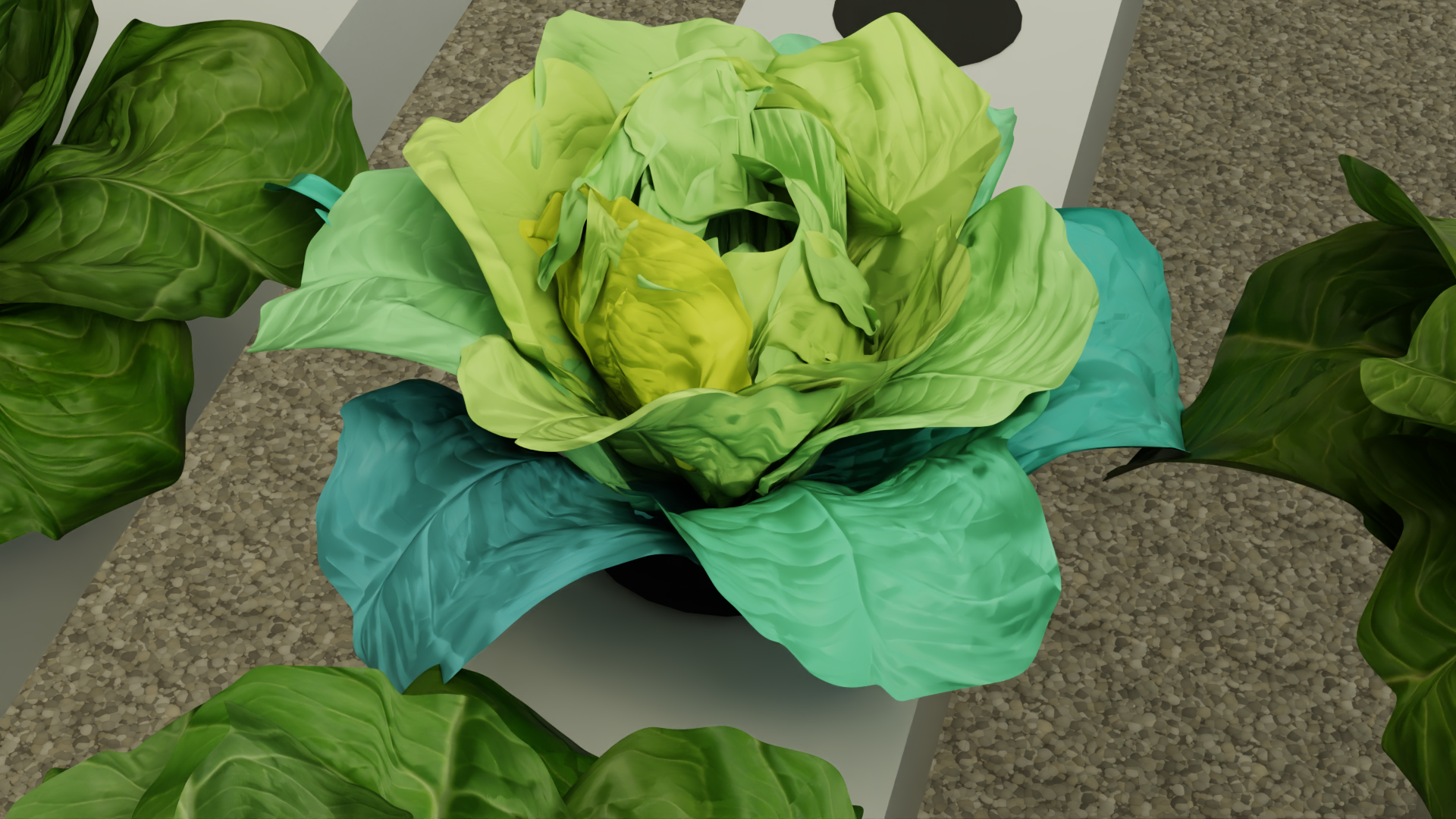
So we built one, 𝗹𝗲𝗮𝗳 𝗯𝘆 𝗹𝗲𝗮𝗳, in Isaac Sim by NVIDIA Robotics, where each leaf experiences the greenhouse conditions at its own position. Each leaf:
🌿 senses the local environment
🌿 performs photosynthesis
🌿 spends carbon on maintenance
🌿 uses the rest to grow by following physiological rules, while a morphology engine shapes the 3D plant
As the plant grows, it changes the conditions each leaf experiences, and those conditions shape the plant back. You can watch it happen in the video. 🎥
A few things it showed us:
📈 Predicted real plant dry weight within 𝟵.𝟱% error
🌱 Captured growth differences across plants caused by neighbor shading
🍃 Showed tipburn risk rising in young inner leaves at the same time tipburn appeared on the real plants
This digital plant is the forward model we need to 𝗰𝗹𝗼𝘀𝗲 𝘁𝗵𝗲 𝘀𝗶𝗺-𝗿𝗲𝗮𝗹-𝘀𝗶𝗺 𝗹𝗼𝗼𝗽 𝗳𝗼𝗿 𝗹𝗶𝘃𝗶𝗻𝗴 𝘀𝘆𝘀𝘁𝗲𝗺𝘀.
📄 https://lnkd.in/eUxU8WTi
Big thanks to Faraz Ahmad and my supervisor, Dr. Tanzeel Rehman. I’m also grateful to Dr. Daniel Wells for providing resources, Hafiz Muhammad Bilal for his support, and Dylan Tobin for his valuable insights throughout the project.
More to come. 🚀
#DigitalTwin #ControlledEnvironmentAgriculture #PlantScience #NVIDIAIsaacSim #PhysicalAI #AuburnUniversity